In Partnership With:



If one were to ask any small business person in Ireland what is keeping them up at night, the answer would most probably revolve around the same problem. The problem of cash flow. Not income, nor profit, nor the economic situation, just simply the issue of whether the money is going to come out from the bank account at the right times.
The unfortunate thing about this is that there are many SMEs in Ireland who make profits, but do not manage their cash flow effectively and end up lacking funds during specific periods of the year. But don’t think of this as an issue of the enterprise. This is normally an issue of bad planning.
Revenue does not equal cash flow, and there are major implications for small companies here. Invoices can be issued today and not received for 30, 60, or even 90 days. Your expenses, however, will keep piling up every day regardless.
The problem becomes even more pronounced due to seasonal business. Imagine a store selling gifts in Galway, generating 40% of its annual revenue in the six weeks prior to Christmas. Think of a landscaping firm in Cork being overwhelmed from April through September, yet barely surviving during January. Visualize a café along the Wild Atlantic Way where the summer months appear to belong to an entirely different business than the winter ones.
All of this is completely predictable, but without a well laid out cash flow strategy, even seasoned entrepreneurs will struggle to handle a slow month.
The first step in creating an effective cash flow strategy involves analysing your historical trading record over the last 12 to 24 months and finding your peaks and troughs. In what periods did your revenue increase? At what times did it fall? Did you have specific months where your outgoings became higher due to paying VAT, leasing, or increasing stocks seasonally?
By knowing the pattern of your year, you will be able to make plans based on it. Here are some important points that could be included in your planning process.
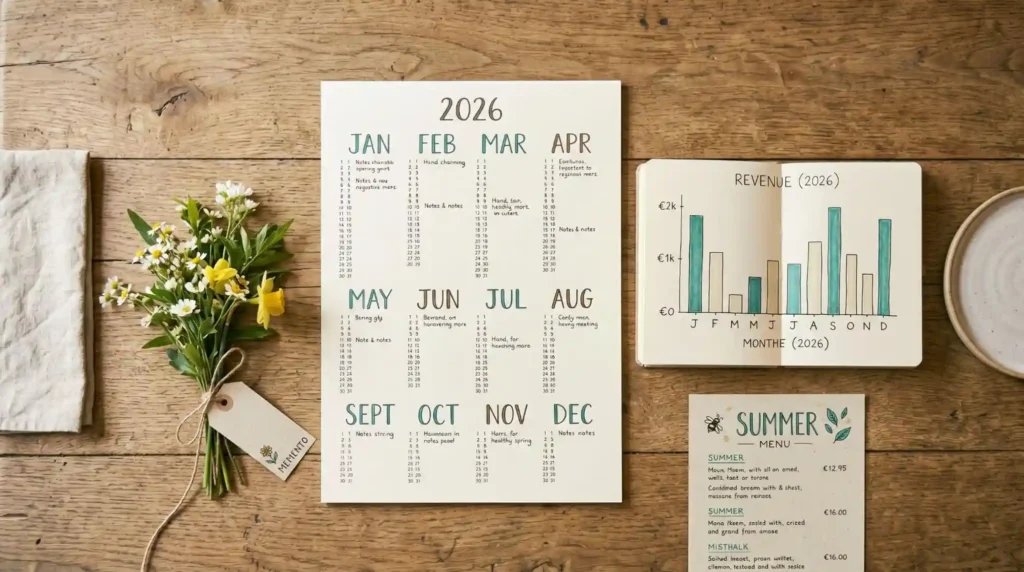
Establishing a cash flow floor. Determine the lowest level of your account balance at any time of the month when you feel comfortable about your financial operations. It is a sort of early alarm level. If you get close to it, it’s time to react.
Create a 13-week rolling forecast. Instead of looking at the year ahead, chart your incoming and outgoing cash flows on a weekly basis for the upcoming quarter. It seems like a daunting task, but once you’ve got it sorted out, it only takes a couple of minutes to refresh and provides an accurate representation of your high spots and low spots.
Plan your expenditures wisely. If you have control over when specific payments are due, see if there is any way you can align those payments with weeks in which your incoming cash flows will be at their peak.
The common belief about borrowing money from outside sources is that it implies a company is having problems. However, the best entrepreneurs with financial acumen plan for the downtime, obtain the working capital in advance, and utilise it to be flexible rather than using it as a bandage solution.
It is here that choosing the right type of finance becomes crucial. A strict repayment structure will only exacerbate the cash flow issue in a seasonal business due to the additional fixed cost incurred during the period of minimum income generation.
This is the approach GRID Finance uses in designing their funding products. Unlike other lenders who force a company to pay the same amount of money each month despite their performance, GRID provides repayments based on how well a business is doing. The Merchant Cash Advance is linked to daily card sales for retail or hospitality firms with a high card income. Therefore, poor trading days will result in lower repayments.
The Flexible Repayment Facility is linked to five-day rolling revenues for B2B companies, ensuring repayments reflect their current performance. This approach is very valuable when dealing with seasonal businesses.
The very best thing you can do as an owner of an Irish SME is to move away from viewing your cash flow as a problem that needs solving and begin looking at it as a system that needs managing. Here are some things to think about before your next quiet season rolls around.

Consider adjusting your terms with customers. When you are giving customers 60-day credit while paying your suppliers within 30 days, you are basically funding your clients yourself. Look at ways you can reduce this gap and offer incentives for prompt payment.


Flexible Finance Solutions for Your Clients in Just 48 Hours.
Set up a partner account and start referring clients. Our easy-to-use platform ensures you can apply 24/7 from anywhere.
